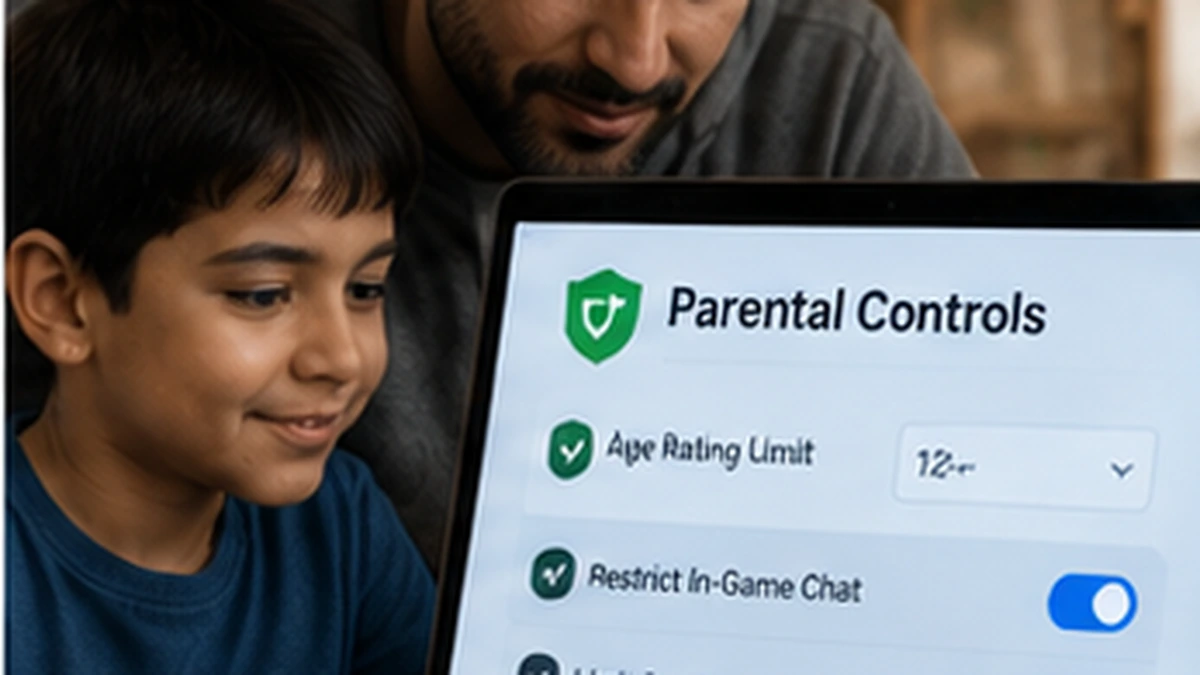
Video game ratings and parental controls becomes easier when gaming problems are treated as a combination of hardware, software, accounts, storage, network services, and game-specific settings. A simple issue such as a failed launch or missing save can come from several layers, so a structured check is more useful than random changes.
This guide explains video game ratings and parental controls in practical language for PC and console players. Store interfaces and platform features change over time, so use the official support page for your exact device, launcher, game version, and account when a current setting or policy matters.
Video game ratings and parental controls answer different questions
Ratings describe age appropriateness and content, while parental controls manage access, play time, spending, communication, or other device features.
For video game ratings and parental controls, use this as check 1: compare the advice with one real game or device, write down what you observed, and change only the setting or file that the evidence points to. This keeps troubleshooting reversible and makes the result easier to understand.
ESRB rating categories suggest age appropriateness
ESRB uses categories such as Everyone, Everyone 10+, Teen, Mature 17+, and Adults Only 18+. The category is a starting point, not a complete description of every scene.
For video game ratings and parental controls, use this as check 2: compare the advice with one real game or device, write down what you observed, and change only the setting or file that the evidence points to. This keeps troubleshooting reversible and makes the result easier to understand.
Content descriptors explain why a rating was assigned
Descriptors can identify violence, language, gambling-related content, sexual material, substances, or other elements that may matter to a family.
For video game ratings and parental controls, use this as check 3: compare the advice with one real game or device, write down what you observed, and change only the setting or file that the evidence points to. This keeps troubleshooting reversible and makes the result easier to understand.
Interactive elements describe online features
ESRB also identifies elements such as Users Interact, Shares Location, or unrestricted Internet access where applicable.
For video game ratings and parental controls, use this as check 4: compare the advice with one real game or device, write down what you observed, and change only the setting or file that the evidence points to. This keeps troubleshooting reversible and makes the result easier to understand.
Read rating summaries for more context
Many rated games have summaries describing the content and context in more detail than the front-of-box category.
For video game ratings and parental controls, use this as check 5: compare the advice with one real game or device, write down what you observed, and change only the setting or file that the evidence points to. This keeps troubleshooting reversible and makes the result easier to understand.
Use device parental controls for practical limits
Consoles, PCs, and mobile devices can offer age restrictions, purchase approval, play-time limits, privacy settings, and communication controls.
For video game ratings and parental controls, use this as check 6: compare the advice with one real game or device, write down what you observed, and change only the setting or file that the evidence points to. This keeps troubleshooting reversible and makes the result easier to understand.
Set spending controls before linking payment methods
In-game purchases, subscriptions, and virtual currency can create unexpected spending if purchase approval is not configured.
For video game ratings and parental controls, use this as check 7: compare the advice with one real game or device, write down what you observed, and change only the setting or file that the evidence points to. This keeps troubleshooting reversible and makes the result easier to understand.
Review voice chat and user-generated content
Online communication can expose children to strangers or unfiltered content even when the base game itself has an age-appropriate rating.
For video game ratings and parental controls, use this as check 8: compare the advice with one real game or device, write down what you observed, and change only the setting or file that the evidence points to. This keeps troubleshooting reversible and makes the result easier to understand.
Play or watch together when a game is unfamiliar
A short shared session can reveal tone, online behavior, difficulty, and monetization in ways a store description cannot.
For video game ratings and parental controls, use this as check 9: compare the advice with one real game or device, write down what you observed, and change only the setting or file that the evidence points to. This keeps troubleshooting reversible and makes the result easier to understand.
Revisit settings as children grow
A control that is appropriate today may become too restrictive or too open later. Family gaming rules work better when they are reviewed rather than left unchanged for years.
For video game ratings and parental controls, use this as check 10: compare the advice with one real game or device, write down what you observed, and change only the setting or file that the evidence points to. This keeps troubleshooting reversible and makes the result easier to understand.
A deeper review for video game ratings and parental controls
Think through the entire game lifecycle: purchase, download, installation, updates, saves, add-ons, account access, controller or display setup, and eventual migration to another device. For video game ratings and parental controls, the most important risk is often not the game itself but the save, account, or configuration that is difficult to replace.
Create a simple recovery plan before making a large change. Know where the save lives, how the game can be reinstalled, which account owns the license, and which settings or mods would need to be restored. This reduces the cost of experimentation. Game review note 9 for video game ratings and parental controls.
A realistic gaming example
A player notices a problem related to video game ratings and parental controls and initially tries several fixes at once. After restarting, checking the official requirements, confirming storage and account status, and changing one variable at a time, the player identifies the real cause without losing saves or reinstalling unnecessarily. The same evidence-first method works across many games and platforms.
Connect this guide to the rest of the Game site
Read buy games safely online for one related gaming topic, and use online multiplayer safety when the second guide helps with compatibility, files, storage, safety, or setup.
These links connect the first Game batch so readers can move from hardware and performance to saves, updates, buying, controllers, and online safety without creating isolated articles.
A seven-day practice plan for video game ratings and parental controls
Day 1: choose one game and record the platform, version, and account. Day 2: check system, storage, or support requirements. Day 3: identify where the game and saves are stored. Day 4: review update and backup status. Day 5: test one relevant setting or repair step. Day 6: confirm the result after a restart. Day 7: write a short checklist you could use again for another title. Game review note 9 for video game ratings and parental controls.
You do not need seven days for every issue. The sequence is a framework that prevents a quick fix from skipping the backup, compatibility, privacy, or account step that could matter later.
Practical checklist
- Game, platform, and account for video game ratings and parental controls identified
- Official requirements or support page checked
- Game files and save data distinguished
- Storage and update status reviewed
- Account and purchase ownership confirmed
- One change tested at a time
- Important saves or settings backed up
- Privacy and safety settings reviewed where relevant
Use the checklist to find the weakest part of your understanding of video game ratings and parental controls. One missing save backup, unsupported driver, wrong account, or unsafe login link can matter more than several settings that are already correct.
Frequently Asked Questions
Should I reinstall the whole game first when something goes wrong?
Usually not. Restart, check requirements, verify files, review updates, and protect saves before using a full reinstall as the first response.
Can a game problem be caused by hardware even when the game installed successfully?
Yes. Minimum requirements, drivers, storage performance, temperature, memory pressure, and controller or display compatibility can all affect play after installation.
Are cloud saves enough by themselves?
They are convenient, but important long-term saves benefit from a second verified backup when the platform allows it. Sync conflicts and account problems can still happen.
Where should I verify current gaming information?
Use the official game publisher, console manufacturer, launcher, rating organization, or operating-system vendor for the exact title and platform.
Practical review 1 for video game ratings and parental controls
Open the official store or support page for one game and compare it with what is actually installed on your device. Confirm the platform, version, storage location, save method, controller support, and account ownership. If one detail is uncertain, resolve that uncertainty before making another change. Game review note 28 for video game ratings and parental controls.
Then write one failure scenario for video game ratings and parental controls and the safest recovery step you would use. A strong gaming setup should explain not only how to play today, but how to recover progress and access when a file, drive, account, or update fails tomorrow. Game review note 1 for video game ratings and parental controls.
Practical review 2 for video game ratings and parental controls
Open the official store or support page for one game and compare it with what is actually installed on your device. Confirm the platform, version, storage location, save method, controller support, and account ownership. If one detail is uncertain, resolve that uncertainty before making another change. Game review note 29 for video game ratings and parental controls.
Then write one failure scenario for video game ratings and parental controls and the safest recovery step you would use. A strong gaming setup should explain not only how to play today, but how to recover progress and access when a file, drive, account, or update fails tomorrow. Game review note 2 for video game ratings and parental controls.
Practical review 3 for video game ratings and parental controls
Open the official store or support page for one game and compare it with what is actually installed on your device. Confirm the platform, version, storage location, save method, controller support, and account ownership. If one detail is uncertain, resolve that uncertainty before making another change. Game review note 30 for video game ratings and parental controls.
Then write one failure scenario for video game ratings and parental controls and the safest recovery step you would use. A strong gaming setup should explain not only how to play today, but how to recover progress and access when a file, drive, account, or update fails tomorrow. Game review note 3 for video game ratings and parental controls.
Authoritative resource to review
For an authoritative reference related to this topic, review ESRB – Ratings Guide. Use that source for the core principle, then follow the support documentation for your exact game and platform.
Final perspective
Video game ratings and parental controls becomes much easier when you protect the irreplaceable parts first—accounts, saves, purchases, and settings—then troubleshoot the replaceable parts such as installation files. That order saves time and lowers the risk of turning a small gaming problem into a larger one.