Category: Game Storage & Saves

Guides for game storage, save data, cloud saves, backups, moving games, and protecting progress.

  • How to Back Up Game Saves Before Reinstalling or Changing PCs

    How to Back Up Game Saves Before Reinstalling or Changing PCs

    Back up game saves becomes easier when gaming problems are treated as a combination of hardware, software, accounts, storage, network services, and game-specific settings. A simple issue such as a failed launch or missing save can come from several layers, so a structured check is more useful than random changes.

    This guide explains back up game saves in practical language for PC and console players. Store interfaces and platform features change over time, so use the official support page for your exact device, launcher, game version, and account when a current setting or policy matters.

    Back up game saves by identifying where the title stores progress

    Different developers choose different save locations. Saves can live in Documents, AppData, the game folder, a launcher cloud, or another platform-specific location.

    For back up game saves, use this as check 1: compare the advice with one real game or device, write down what you observed, and change only the setting or file that the evidence points to. This keeps troubleshooting reversible and makes the result easier to understand.

    Check whether cloud saves are actually enabled

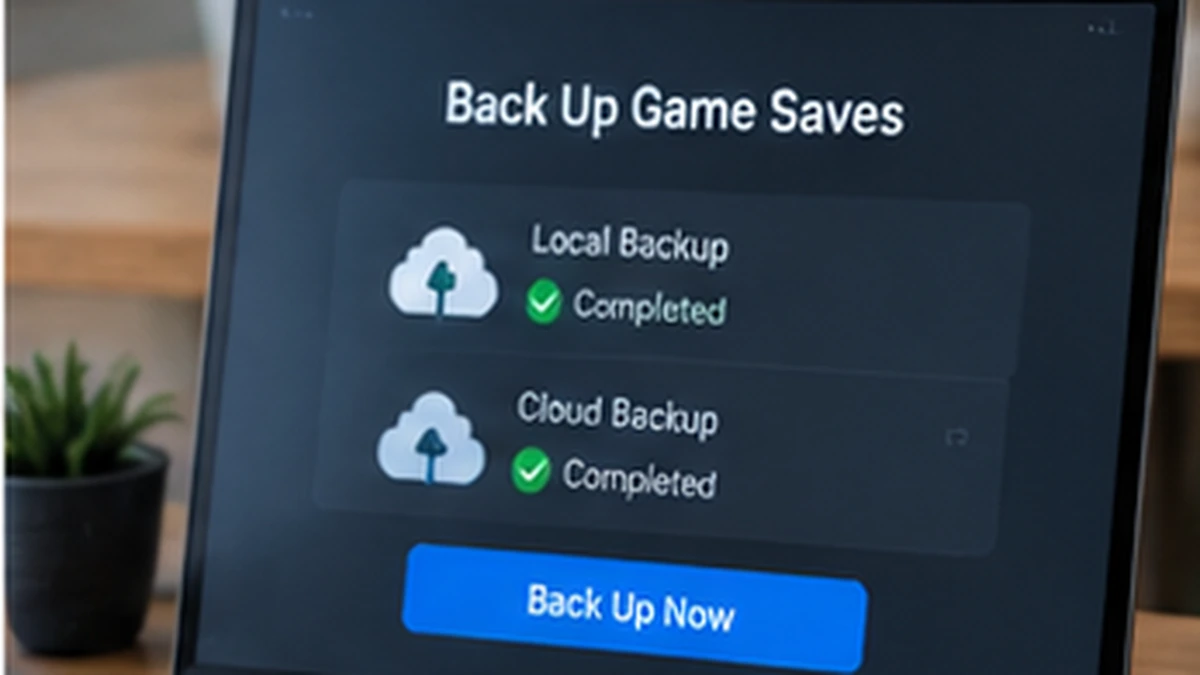
    A cloud icon or account sign-in does not prove the latest save uploaded successfully. Check sync status before wiping or moving a device.

    For back up game saves, use this as check 2: compare the advice with one real game or device, write down what you observed, and change only the setting or file that the evidence points to. This keeps troubleshooting reversible and makes the result easier to understand.

    Keep a local copy for important long-term saves

    Cloud services are convenient but accounts can have sync conflicts or outages. A separate copy gives you another recovery path.

    For back up game saves, use this as check 3: compare the advice with one real game or device, write down what you observed, and change only the setting or file that the evidence points to. This keeps troubleshooting reversible and makes the result easier to understand.

    Back up configuration and profile files too

    Key bindings, graphics settings, mods, character presets, screenshots, and profiles can take a long time to rebuild even when the main save is safe.

    For back up game saves, use this as check 4: compare the advice with one real game or device, write down what you observed, and change only the setting or file that the evidence points to. This keeps troubleshooting reversible and makes the result easier to understand.

    Use dated folders for manual backups

    A simple date in the folder name makes it easier to identify the newest clean copy and prevents an older save from overwriting a newer one accidentally.

    For back up game saves, use this as check 5: compare the advice with one real game or device, write down what you observed, and change only the setting or file that the evidence points to. This keeps troubleshooting reversible and makes the result easier to understand.

    Test that the backup contains real files

    Check size, modified date, and folder contents. A shortcut, empty directory, or unsynced cloud placeholder is not a complete backup.

    For back up game saves, use this as check 6: compare the advice with one real game or device, write down what you observed, and change only the setting or file that the evidence points to. This keeps troubleshooting reversible and makes the result easier to understand.

    Know whether the game uses account-bound progress

    Some games store progression on the publisher server rather than locally. Local copying may not be necessary or may not restore account progression.

    For back up game saves, use this as check 7: compare the advice with one real game or device, write down what you observed, and change only the setting or file that the evidence points to. This keeps troubleshooting reversible and makes the result easier to understand.

    Move saves separately from the game installation when needed

    Steam notes that third-party saves may live outside the Steam installation folder. Moving the game library does not automatically guarantee every save moves with it.

    For back up game saves, use this as check 8: compare the advice with one real game or device, write down what you observed, and change only the setting or file that the evidence points to. This keeps troubleshooting reversible and makes the result easier to understand.

    Restore one title before deleting the old device

    Install the game, copy or sync the save, launch it, and confirm progress before wiping the original PC or storage drive.

    For back up game saves, use this as check 9: compare the advice with one real game or device, write down what you observed, and change only the setting or file that the evidence points to. This keeps troubleshooting reversible and makes the result easier to understand.

    Keep backup instructions with the files

    Record the game version, save location, account, mods, and restore destination so the backup remains understandable months later.

    For back up game saves, use this as check 10: compare the advice with one real game or device, write down what you observed, and change only the setting or file that the evidence points to. This keeps troubleshooting reversible and makes the result easier to understand.

    A deeper review for back up game saves

    Think through the entire game lifecycle: purchase, download, installation, updates, saves, add-ons, account access, controller or display setup, and eventual migration to another device. For back up game saves, the most important risk is often not the game itself but the save, account, or configuration that is difficult to replace.

    Create a simple recovery plan before making a large change. Know where the save lives, how the game can be reinstalled, which account owns the license, and which settings or mods would need to be restored. This reduces the cost of experimentation. Game review note 4 for back up game saves.

    A realistic gaming example

    A player notices a problem related to back up game saves and initially tries several fixes at once. After restarting, checking the official requirements, confirming storage and account status, and changing one variable at a time, the player identifies the real cause without losing saves or reinstalling unnecessarily. The same evidence-first method works across many games and platforms.

    Connect this guide to the rest of the Game site

    Read manage game storage for one related gaming topic, and use verify game files when the second guide helps with compatibility, files, storage, safety, or setup.

    These links connect the first Game batch so readers can move from hardware and performance to saves, updates, buying, controllers, and online safety without creating isolated articles.

    A seven-day practice plan for back up game saves

    Day 1: choose one game and record the platform, version, and account. Day 2: check system, storage, or support requirements. Day 3: identify where the game and saves are stored. Day 4: review update and backup status. Day 5: test one relevant setting or repair step. Day 6: confirm the result after a restart. Day 7: write a short checklist you could use again for another title. Game review note 4 for back up game saves.

    You do not need seven days for every issue. The sequence is a framework that prevents a quick fix from skipping the backup, compatibility, privacy, or account step that could matter later.

    Practical checklist

    • Game, platform, and account for back up game saves identified
    • Official requirements or support page checked
    • Game files and save data distinguished
    • Storage and update status reviewed
    • Account and purchase ownership confirmed
    • One change tested at a time
    • Important saves or settings backed up
    • Privacy and safety settings reviewed where relevant

    Use the checklist to find the weakest part of your understanding of back up game saves. One missing save backup, unsupported driver, wrong account, or unsafe login link can matter more than several settings that are already correct.

    Frequently Asked Questions

    Should I reinstall the whole game first when something goes wrong?

    Usually not. Restart, check requirements, verify files, review updates, and protect saves before using a full reinstall as the first response.

    Can a game problem be caused by hardware even when the game installed successfully?

    Yes. Minimum requirements, drivers, storage performance, temperature, memory pressure, and controller or display compatibility can all affect play after installation.

    Are cloud saves enough by themselves?

    They are convenient, but important long-term saves benefit from a second verified backup when the platform allows it. Sync conflicts and account problems can still happen.

    Where should I verify current gaming information?

    Use the official game publisher, console manufacturer, launcher, rating organization, or operating-system vendor for the exact title and platform.

    Practical review 1 for back up game saves

    Open the official store or support page for one game and compare it with what is actually installed on your device. Confirm the platform, version, storage location, save method, controller support, and account ownership. If one detail is uncertain, resolve that uncertainty before making another change. Game review note 11 for back up game saves.

    Then write one failure scenario for back up game saves and the safest recovery step you would use. A strong gaming setup should explain not only how to play today, but how to recover progress and access when a file, drive, account, or update fails tomorrow. Game review note 1 for back up game saves.

    Practical review 2 for back up game saves

    Open the official store or support page for one game and compare it with what is actually installed on your device. Confirm the platform, version, storage location, save method, controller support, and account ownership. If one detail is uncertain, resolve that uncertainty before making another change. Game review note 12 for back up game saves.

    Then write one failure scenario for back up game saves and the safest recovery step you would use. A strong gaming setup should explain not only how to play today, but how to recover progress and access when a file, drive, account, or update fails tomorrow. Game review note 2 for back up game saves.

    Practical review 3 for back up game saves

    Open the official store or support page for one game and compare it with what is actually installed on your device. Confirm the platform, version, storage location, save method, controller support, and account ownership. If one detail is uncertain, resolve that uncertainty before making another change. Game review note 13 for back up game saves.

    Then write one failure scenario for back up game saves and the safest recovery step you would use. A strong gaming setup should explain not only how to play today, but how to recover progress and access when a file, drive, account, or update fails tomorrow. Game review note 3 for back up game saves.

    Authoritative resource to review

    For an authoritative reference related to this topic, review Steam Support – Moving a Steam Installation and Games. Use that source for the core principle, then follow the support documentation for your exact game and platform.

    Final perspective

    Back up game saves becomes much easier when you protect the irreplaceable parts first—accounts, saves, purchases, and settings—then troubleshoot the replaceable parts such as installation files. That order saves time and lowers the risk of turning a small gaming problem into a larger one.
  • How to Manage Game Storage Without Losing Save Data

    How to Manage Game Storage Without Losing Save Data

    Manage game storage becomes easier when gaming problems are treated as a combination of hardware, software, accounts, storage, network services, and game-specific settings. A simple issue such as a failed launch or missing save can come from several layers, so a structured check is more useful than random changes.

    This guide explains manage game storage in practical language for PC and console players. Store interfaces and platform features change over time, so use the official support page for your exact device, launcher, game version, and account when a current setting or policy matters.

    Manage game storage by separating installation data from save data

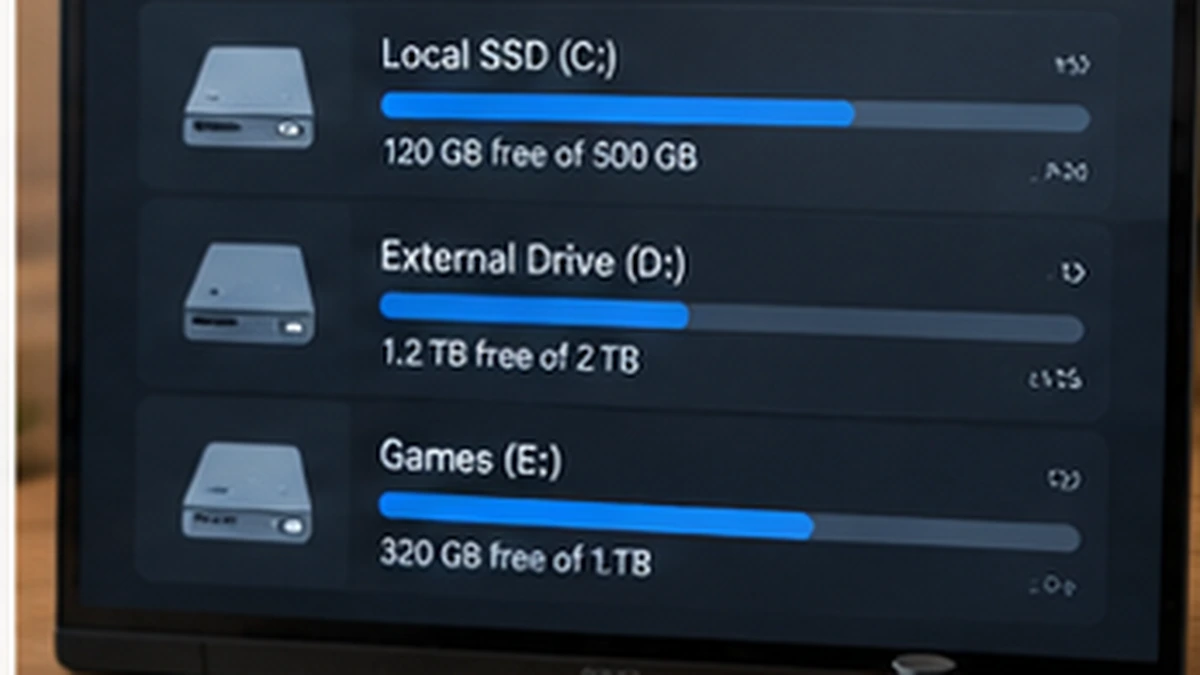
    Game files can often be redownloaded, while local save data may be unique. Know which type you are deleting before freeing space.

    For manage game storage, use this as check 1: compare the advice with one real game or device, write down what you observed, and change only the setting or file that the evidence points to. This keeps troubleshooting reversible and makes the result easier to understand.

    Check built-in storage tools first

    Modern consoles and launchers show installed game size, add-ons, captures, and storage locations. Use these tools before manually deleting folders.

    For manage game storage, use this as check 2: compare the advice with one real game or device, write down what you observed, and change only the setting or file that the evidence points to. This keeps troubleshooting reversible and makes the result easier to understand.

    Move large games when the platform supports it

    PlayStation documents several storage options for game data, saved data, screenshots, and video clips. Other platforms provide their own supported move process.

    For manage game storage, use this as check 3: compare the advice with one real game or device, write down what you observed, and change only the setting or file that the evidence points to. This keeps troubleshooting reversible and makes the result easier to understand.

    Do not assume external storage can run every title directly

    Some current-generation console games can be stored on external USB drives but must be moved back to faster internal or expansion storage before play.

    For manage game storage, use this as check 4: compare the advice with one real game or device, write down what you observed, and change only the setting or file that the evidence points to. This keeps troubleshooting reversible and makes the result easier to understand.

    Protect save data before deleting games

    On some platforms, uninstalling a game leaves saves intact; on others, manual file deletion can remove both. Confirm the platform behavior first.

    For manage game storage, use this as check 5: compare the advice with one real game or device, write down what you observed, and change only the setting or file that the evidence points to. This keeps troubleshooting reversible and makes the result easier to understand.

    Clean captures and old installers separately

    Screenshots, video clips, shader caches, mods, workshop content, and installers can consume substantial space without being part of the base game.

    For manage game storage, use this as check 6: compare the advice with one real game or device, write down what you observed, and change only the setting or file that the evidence points to. This keeps troubleshooting reversible and makes the result easier to understand.

    Leave free space for updates

    Large games can need significant temporary space during patching. Filling a drive to its last few gigabytes can cause updates to fail.

    For manage game storage, use this as check 7: compare the advice with one real game or device, write down what you observed, and change only the setting or file that the evidence points to. This keeps troubleshooting reversible and makes the result easier to understand.

    Use faster storage for titles that stream assets heavily

    Open-world and high-resolution games can benefit from SSD performance. Prioritize demanding titles for the faster drive when storage is limited.

    For manage game storage, use this as check 8: compare the advice with one real game or device, write down what you observed, and change only the setting or file that the evidence points to. This keeps troubleshooting reversible and makes the result easier to understand.

    Archive games you are not actively playing

    Moving or uninstalling a completed game can free large amounts of space while preserving saves and purchase rights for later redownload.

    For manage game storage, use this as check 9: compare the advice with one real game or device, write down what you observed, and change only the setting or file that the evidence points to. This keeps troubleshooting reversible and makes the result easier to understand.

    Document custom mod folders before moving a PC game

    Mods and third-party tools can live outside the official library. Record their locations so storage cleanup does not accidentally destroy a custom setup.

    For manage game storage, use this as check 10: compare the advice with one real game or device, write down what you observed, and change only the setting or file that the evidence points to. This keeps troubleshooting reversible and makes the result easier to understand.

    A deeper review for manage game storage

    Think through the entire game lifecycle: purchase, download, installation, updates, saves, add-ons, account access, controller or display setup, and eventual migration to another device. For manage game storage, the most important risk is often not the game itself but the save, account, or configuration that is difficult to replace.

    Create a simple recovery plan before making a large change. Know where the save lives, how the game can be reinstalled, which account owns the license, and which settings or mods would need to be restored. This reduces the cost of experimentation. Game review note 5 for manage game storage.

    A realistic gaming example

    A player notices a problem related to manage game storage and initially tries several fixes at once. After restarting, checking the official requirements, confirming storage and account status, and changing one variable at a time, the player identifies the real cause without losing saves or reinstalling unnecessarily. The same evidence-first method works across many games and platforms.

    Connect this guide to the rest of the Game site

    Read back up game saves for one related gaming topic, and use game updates and DLC when the second guide helps with compatibility, files, storage, safety, or setup.

    These links connect the first Game batch so readers can move from hardware and performance to saves, updates, buying, controllers, and online safety without creating isolated articles.

    A seven-day practice plan for manage game storage

    Day 1: choose one game and record the platform, version, and account. Day 2: check system, storage, or support requirements. Day 3: identify where the game and saves are stored. Day 4: review update and backup status. Day 5: test one relevant setting or repair step. Day 6: confirm the result after a restart. Day 7: write a short checklist you could use again for another title. Game review note 5 for manage game storage.

    You do not need seven days for every issue. The sequence is a framework that prevents a quick fix from skipping the backup, compatibility, privacy, or account step that could matter later.

    Practical checklist

    • Game, platform, and account for manage game storage identified
    • Official requirements or support page checked
    • Game files and save data distinguished
    • Storage and update status reviewed
    • Account and purchase ownership confirmed
    • One change tested at a time
    • Important saves or settings backed up
    • Privacy and safety settings reviewed where relevant

    Use the checklist to find the weakest part of your understanding of manage game storage. One missing save backup, unsupported driver, wrong account, or unsafe login link can matter more than several settings that are already correct.

    Frequently Asked Questions

    Should I reinstall the whole game first when something goes wrong?

    Usually not. Restart, check requirements, verify files, review updates, and protect saves before using a full reinstall as the first response.

    Can a game problem be caused by hardware even when the game installed successfully?

    Yes. Minimum requirements, drivers, storage performance, temperature, memory pressure, and controller or display compatibility can all affect play after installation.

    Are cloud saves enough by themselves?

    They are convenient, but important long-term saves benefit from a second verified backup when the platform allows it. Sync conflicts and account problems can still happen.

    Where should I verify current gaming information?

    Use the official game publisher, console manufacturer, launcher, rating organization, or operating-system vendor for the exact title and platform.

    Practical review 1 for manage game storage

    Open the official store or support page for one game and compare it with what is actually installed on your device. Confirm the platform, version, storage location, save method, controller support, and account ownership. If one detail is uncertain, resolve that uncertainty before making another change. Game review note 14 for manage game storage.

    Then write one failure scenario for manage game storage and the safest recovery step you would use. A strong gaming setup should explain not only how to play today, but how to recover progress and access when a file, drive, account, or update fails tomorrow. Game review note 1 for manage game storage.

    Practical review 2 for manage game storage

    Open the official store or support page for one game and compare it with what is actually installed on your device. Confirm the platform, version, storage location, save method, controller support, and account ownership. If one detail is uncertain, resolve that uncertainty before making another change. Game review note 15 for manage game storage.

    Then write one failure scenario for manage game storage and the safest recovery step you would use. A strong gaming setup should explain not only how to play today, but how to recover progress and access when a file, drive, account, or update fails tomorrow. Game review note 2 for manage game storage.

    Practical review 3 for manage game storage

    Open the official store or support page for one game and compare it with what is actually installed on your device. Confirm the platform, version, storage location, save method, controller support, and account ownership. If one detail is uncertain, resolve that uncertainty before making another change. Game review note 16 for manage game storage.

    Then write one failure scenario for manage game storage and the safest recovery step you would use. A strong gaming setup should explain not only how to play today, but how to recover progress and access when a file, drive, account, or update fails tomorrow. Game review note 3 for manage game storage.

    Practical review 4 for manage game storage

    Open the official store or support page for one game and compare it with what is actually installed on your device. Confirm the platform, version, storage location, save method, controller support, and account ownership. If one detail is uncertain, resolve that uncertainty before making another change. Game review note 17 for manage game storage.

    Then write one failure scenario for manage game storage and the safest recovery step you would use. A strong gaming setup should explain not only how to play today, but how to recover progress and access when a file, drive, account, or update fails tomorrow. Game review note 4 for manage game storage.

    Authoritative resource to review

    For an authoritative reference related to this topic, review PlayStation Support – Manage PS5 Storage Space. Use that source for the core principle, then follow the support documentation for your exact game and platform.

    Final perspective

    Manage game storage becomes much easier when you protect the irreplaceable parts first—accounts, saves, purchases, and settings—then troubleshoot the replaceable parts such as installation files. That order saves time and lowers the risk of turning a small gaming problem into a larger one.