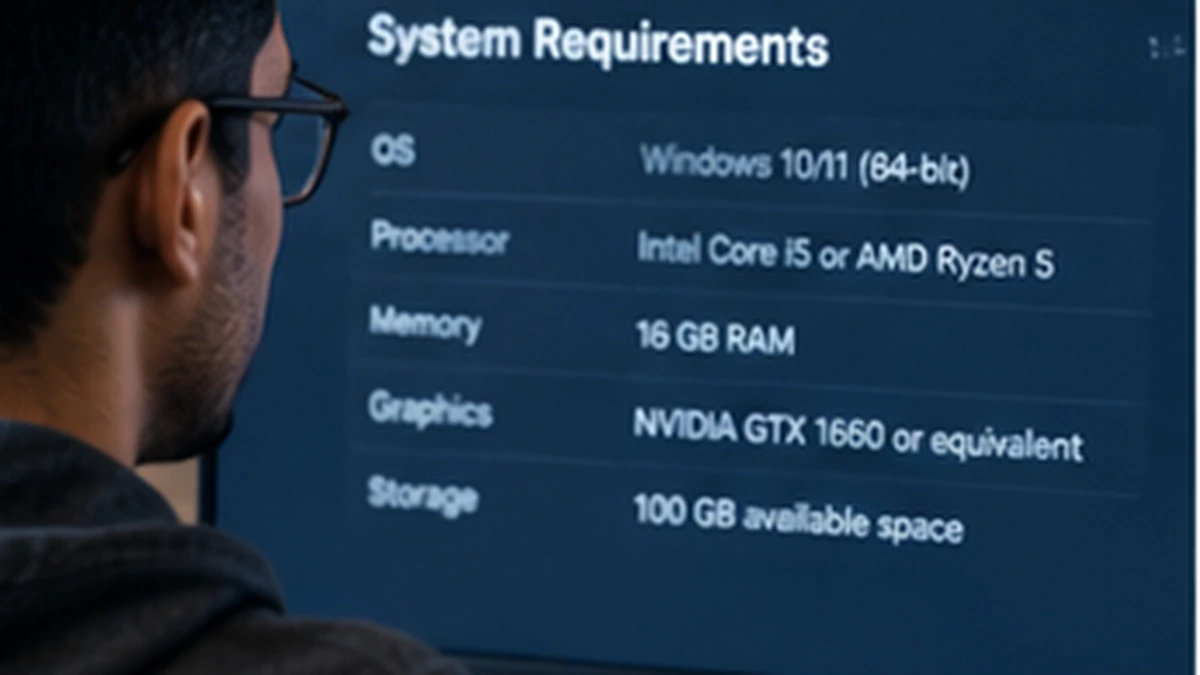
Game system requirements becomes easier when gaming problems are treated as a combination of hardware, software, accounts, storage, network services, and game-specific settings. A simple issue such as a failed launch or missing save can come from several layers, so a structured check is more useful than random changes.
This guide explains game system requirements in practical language for PC and console players. Store interfaces and platform features change over time, so use the official support page for your exact device, launcher, game version, and account when a current setting or policy matters.
Game system requirements begin with the supported operating system
Check whether the game officially supports Windows, macOS, Linux, a console generation, or another platform. A game may install on an unsupported system and still fail because required APIs, drivers, or services are missing.
For game system requirements, use this as check 1: compare the advice with one real game or device, write down what you observed, and change only the setting or file that the evidence points to. This keeps troubleshooting reversible and makes the result easier to understand.
Minimum and recommended requirements serve different purposes
Minimum requirements generally describe the lowest supported configuration, while recommended requirements aim for a smoother experience. A PC at the minimum line may need lower graphics settings or may struggle in demanding scenes.
For game system requirements, use this as check 2: compare the advice with one real game or device, write down what you observed, and change only the setting or file that the evidence points to. This keeps troubleshooting reversible and makes the result easier to understand.
Processor requirements are more than clock speed
Games can depend on CPU architecture, core count, single-thread performance, instruction support, and platform age. Compare the exact processor family and not only the GHz number.
For game system requirements, use this as check 3: compare the advice with one real game or device, write down what you observed, and change only the setting or file that the evidence points to. This keeps troubleshooting reversible and makes the result easier to understand.
Graphics requirements are often the biggest performance factor
Check GPU model, video memory, DirectX or Vulkan support, and driver support. Laptop graphics and integrated graphics can behave very differently from a desktop card with a similar name.
For game system requirements, use this as check 4: compare the advice with one real game or device, write down what you observed, and change only the setting or file that the evidence points to. This keeps troubleshooting reversible and makes the result easier to understand.
RAM affects loading and background pressure
If the game needs most of the installed memory, browsers, launchers, voice chat, capture tools, and other background apps can create stutter or crashes.
For game system requirements, use this as check 5: compare the advice with one real game or device, write down what you observed, and change only the setting or file that the evidence points to. This keeps troubleshooting reversible and makes the result easier to understand.
Storage requirements include free working space
A download can expand during installation, updates can need temporary free space, and shader caches or save data can grow later. Do not plan around the exact download size only.
For game system requirements, use this as check 6: compare the advice with one real game or device, write down what you observed, and change only the setting or file that the evidence points to. This keeps troubleshooting reversible and makes the result easier to understand.
SSD recommendations can affect loading and streaming
Modern games can stream assets continuously. A title that recommends an SSD may load slowly or stutter when installed on a slower drive even if the game technically starts.
For game system requirements, use this as check 7: compare the advice with one real game or device, write down what you observed, and change only the setting or file that the evidence points to. This keeps troubleshooting reversible and makes the result easier to understand.
Controller, account, and online requirements matter too
Some games require a specific launcher, account, Internet connection, controller feature, secure boot option, or online service. These are part of compatibility even when the CPU and GPU are strong enough.
For game system requirements, use this as check 8: compare the advice with one real game or device, write down what you observed, and change only the setting or file that the evidence points to. This keeps troubleshooting reversible and makes the result easier to understand.
Compare your real hardware before purchasing
Use your system-information tools to record CPU, GPU, RAM, operating system, and free storage, then compare those values with the publisher or store page.
For game system requirements, use this as check 9: compare the advice with one real game or device, write down what you observed, and change only the setting or file that the evidence points to. This keeps troubleshooting reversible and makes the result easier to understand.
Leave performance headroom
A system that barely meets minimum requirements has little room for future patches, higher resolutions, background software, or demanding game areas. Extra headroom usually makes troubleshooting easier.
For game system requirements, use this as check 10: compare the advice with one real game or device, write down what you observed, and change only the setting or file that the evidence points to. This keeps troubleshooting reversible and makes the result easier to understand.
A deeper review for game system requirements
Think through the entire game lifecycle: purchase, download, installation, updates, saves, add-ons, account access, controller or display setup, and eventual migration to another device. For game system requirements, the most important risk is often not the game itself but the save, account, or configuration that is difficult to replace.
Create a simple recovery plan before making a large change. Know where the save lives, how the game can be reinstalled, which account owns the license, and which settings or mods would need to be restored. This reduces the cost of experimentation. Game review note 1 for game system requirements.
A realistic gaming example
A player notices a problem related to game system requirements and initially tries several fixes at once. After restarting, checking the official requirements, confirming storage and account status, and changing one variable at a time, the player identifies the real cause without losing saves or reinstalling unnecessarily. The same evidence-first method works across many games and platforms.
Connect this guide to the rest of the Game site
Read optimize PC game settings for one related gaming topic, and use manage game storage when the second guide helps with compatibility, files, storage, safety, or setup.
These links connect the first Game batch so readers can move from hardware and performance to saves, updates, buying, controllers, and online safety without creating isolated articles.
A seven-day practice plan for game system requirements
Day 1: choose one game and record the platform, version, and account. Day 2: check system, storage, or support requirements. Day 3: identify where the game and saves are stored. Day 4: review update and backup status. Day 5: test one relevant setting or repair step. Day 6: confirm the result after a restart. Day 7: write a short checklist you could use again for another title. Game review note 1 for game system requirements.
You do not need seven days for every issue. The sequence is a framework that prevents a quick fix from skipping the backup, compatibility, privacy, or account step that could matter later.
Practical checklist
- Game, platform, and account for game system requirements identified
- Official requirements or support page checked
- Game files and save data distinguished
- Storage and update status reviewed
- Account and purchase ownership confirmed
- One change tested at a time
- Important saves or settings backed up
- Privacy and safety settings reviewed where relevant
Use the checklist to find the weakest part of your understanding of game system requirements. One missing save backup, unsupported driver, wrong account, or unsafe login link can matter more than several settings that are already correct.
Frequently Asked Questions
Should I reinstall the whole game first when something goes wrong?
Usually not. Restart, check requirements, verify files, review updates, and protect saves before using a full reinstall as the first response.
Can a game problem be caused by hardware even when the game installed successfully?
Yes. Minimum requirements, drivers, storage performance, temperature, memory pressure, and controller or display compatibility can all affect play after installation.
Are cloud saves enough by themselves?
They are convenient, but important long-term saves benefit from a second verified backup when the platform allows it. Sync conflicts and account problems can still happen.
Where should I verify current gaming information?
Use the official game publisher, console manufacturer, launcher, rating organization, or operating-system vendor for the exact title and platform.
Practical review 1 for game system requirements
Open the official store or support page for one game and compare it with what is actually installed on your device. Confirm the platform, version, storage location, save method, controller support, and account ownership. If one detail is uncertain, resolve that uncertainty before making another change. Game review note 1 for game system requirements.
Then write one failure scenario for game system requirements and the safest recovery step you would use. A strong gaming setup should explain not only how to play today, but how to recover progress and access when a file, drive, account, or update fails tomorrow. Game review note 1 for game system requirements.
Practical review 2 for game system requirements
Open the official store or support page for one game and compare it with what is actually installed on your device. Confirm the platform, version, storage location, save method, controller support, and account ownership. If one detail is uncertain, resolve that uncertainty before making another change. Game review note 2 for game system requirements.
Then write one failure scenario for game system requirements and the safest recovery step you would use. A strong gaming setup should explain not only how to play today, but how to recover progress and access when a file, drive, account, or update fails tomorrow. Game review note 2 for game system requirements.
Practical review 3 for game system requirements
Open the official store or support page for one game and compare it with what is actually installed on your device. Confirm the platform, version, storage location, save method, controller support, and account ownership. If one detail is uncertain, resolve that uncertainty before making another change. Game review note 3 for game system requirements.
Then write one failure scenario for game system requirements and the safest recovery step you would use. A strong gaming setup should explain not only how to play today, but how to recover progress and access when a file, drive, account, or update fails tomorrow. Game review note 3 for game system requirements.
Authoritative resource to review
For an authoritative reference related to this topic, review Steam Support – Games Do Not Run After Preparing to Launch. Use that source for the core principle, then follow the support documentation for your exact game and platform.
Final perspective
Game system requirements becomes much easier when you protect the irreplaceable parts first—accounts, saves, purchases, and settings—then troubleshoot the replaceable parts such as installation files. That order saves time and lowers the risk of turning a small gaming problem into a larger one.